
 Some books pull you in with their characters, and others grip you with the questions they force you to ask. Michael Clark’s The Truth About You does both, delivering a darkly compelling story that tests the boundaries of loyalty, love, and truth.
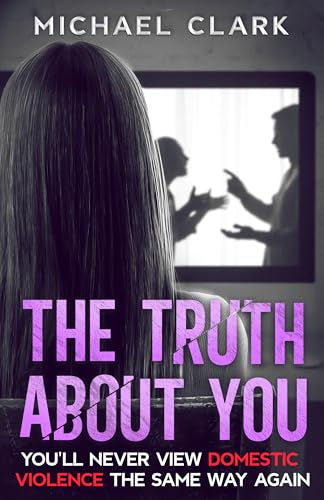 The Truth About You: You’ll never view domestic violence the same way again.
by Michael Clark
When Lucy and Meg’s mother is assaulted by her husband, stepfather Greg, his arrest should have been the end. But when she chooses to remain with him, the sisters face a choice of their own. Hoping to protect her, they secretly install hidden cameras, determined to capture the reality of what’s happening inside their home. What they uncover is not what Lucy expects, and the revelations unsettle more than her family—they shatter the easy narratives about domestic violence that society clings to. At once a gripping family drama and a literary meditation on justice and morality, The Truth About You dares readers to look beyond black-and-white assumptions and grapple with the difficult gray spaces of human behavior.
Amazon: https://bit.ly/3UL9Vv9
Goodreads: https://www.goodreads.com/book/show/240063457-the-truth-about-you

Author Interview
How did you research your book?
Unfortunately, I have lived through many of the situations like those described in The Truth About You – both on the side of the abuser and the abused. More fortunately, I hear hundreds and hundreds of stories from our clients at the Ananias Foundation, and the circumstances described are an amalgamation of their stories, too. As part of my work, I invest significant time keeping up with the research, thought leaders, laws, and best practices surrounding the subject of domestic violence and abuse.
What’s the hardest scene or character you wrote—and why?
Meg was the most difficult character to write about, as she represented everything The Truth About You was written to challenge. She bought into the dominant narrative about domestic violence and held on to that view, despite the ever-growing pile of evidence in front of her which refuted her assessment. Still, I wanted to give Meg depth as a human being, and none are all bad or all good. Balancing her slavish loyalty to the unhelpful narrative with positives was challenging—like trying to say something nice about your enemy.
Where do you get your ideas?
The situations and dialogue were easy – see my answer to the question about my research process above. Settings were modeled after locations found in the Des Moines, IA area where I live. The hidden camera idea stemmed from arguments I had with my now ex-wife. I knew that if there was a hidden camera somewhere in the house, what people would see in those videos would have been far different (and balanced) than what she claimed happened. I never installed cameras, but I seriously considered it.
What sets your book apart from others in your genre?
There are so many novels that contain scenes where domestic violence or abuse happens. Nearly all of them follow the standard script—the stereotypical story of the abusive and controlling man and the innocent woman victim. Yet that story is the minority of domestic violence cases. Women abuse men at similar rates, around half of abusive relationships are mutually abusive, abuse, when it happens, doesn’t always continue, and abusers do change. This more accurate story is the one told in The Truth About You.
Do you write every day? What’s your schedule?
I have a full-time job as the Executive Director of the Ananias Foundation, so I cannot write every day like someone who is a full-time writer. That said, I do a fair amount of writing in my position, albeit some of that writing is as mundane as responding to emails.
Any quirky writing rituals or must-have snacks?
I have a secret: I never took a typing or keyboarding class in school, never formally learned to type, and my typing is slow and filled with typos. So how did I plunk out a 86,000 word manuscript? I narrated much of the story off the top of my head using voice recognition, then went back and made the necessary corrections. I found this process produced the text faster and contained fewer errors than what my clumsy fingers created.
What’s your favorite compliment you’ve received as a writer?
When I hear from readers that I described situations and characters they strongly related to, and as a result, gave them a voice they never felt they had.
About the Author
Michael Clark is the founder and Executive Director of the Ananias Foundation, a nonprofit devoted to ending domestic violence by working with those who have caused harm. His perspective is shaped by his own past as a former domestic violence offender—a journey he details in his memoir From Villain to Hero. Having guided thousands through the difficult process of change, he brings an unparalleled depth of understanding to his fiction. With The Truth About You, Clark blends emotional storytelling with lived insight, challenging readers to reconsider what they think they know about abuse, healing, and redemption. Learn more at michaelclarkauthor.com.
Note: Some posts may contain affiliate links. Should you choose to purchase a product, we will receive a small commission for the sale at no additional cost to you. Chapter Break is a participant in the Amazon Services LLC Associates Program, an affiliate advertising program designed to provide a means for sites to earn advertising fees by advertising and linking to Amazon.com.


Sounds like it could be a hard read. But with someone who has experience, it is probably one that could be a necessary one. Thanks for sharing!
Lisa Mandina (Lisa Loves Literature) recently posted…E-galley Review: If Looks Could Kill by Julie Berry