
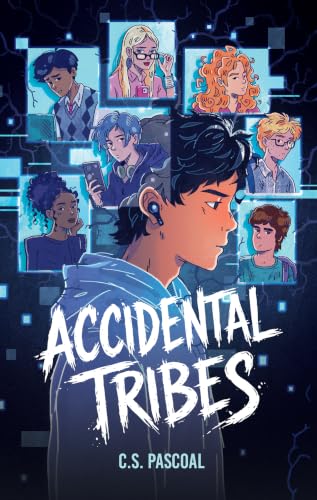
 Accidental Tribes: An acclaimed illustrated mystery set in NYC about eight misfit teens, digital secrets, and the search for belonging
Title: Accidental Tribes
Author: C.S. Pascoal
Publisher: Prospera Books, New York
Genre: YA illustrated mystery / coming-of-age fiction
Audience: Ages 13–18, with adult crossover appeal
Publication date: September 22, 2026
Formats: Paperback, hardcover, and ebook (204 pages)
Website: https://accidentaltribes.com
Book description
Eight kids nobody trusted. One room everyone forgot.
After hacked grades, viral games, and AI-generated humiliation upend their lives, eight New York City teens find themselves in Solitaria, a forgotten classroom where a thirty-day experiment could determine their futures. As unlikely friendships develop, they uncover the trail of an unsolved death and secrets the adults would rather bury.
An illustrated YA mystery about identity, belonging, and the choices we make online and off, Accidental Tribes asks: What happens when everyone has already decided who you are?
AI statement: No AI was used anywhere in the book, including its text and illustrations.
Praise for Accidental Tribes
“Original, exceptional, and a riveting read from start to finish. […] Accidental Tribes is an unreservedly recommended pick for middle school, high school, and community library YA Fiction collections.”
Midwest Book Review
“Fast-paced and compelling, perfect for teens who want fiction grounded in the realities of the twenty-first century.”
The Children’s Book Review
“This work is a brilliant triumph. […] It is a true masterpiece of pure togetherness.”
Readers’ Favorite Review
From Our Teen Reader Council
“I like how you described the tribe’s friendship through how forests connect. I wish I could meet all the characters and learn more about their stories.”
A., 16 years old
“Being trapped inside is indeed something we teenagers would do because of our screens… I felt especially connected to Jamie, because I often feel my voice is not heard.”
A., 12 years old
“I had never thought of people as portals before. This part of the book made me stop and think about the people around me.”
L., 17 years old
Author Interview
Have you been able to incorporate your previous experience in your jobs/education in your writing?
Absolutely. I entered the tech industry at sixteen, and much of my career has been about understanding how technology changes our lives. Now, as the mother of a fourteen-year-old boy in New York City, those questions are also at my dinner table.
We talk about teenagers’ screen time as though their phones are simply devices. To them, they hold friendships, communities, information, status, and dreams. With Accidental Tribes (Prospera Books, accidentaltribes.com), I wanted to write a story that understood those stakes and helped readers see the rules operating beneath the screen.
Tell us what you enjoy most about writing young adult fiction.
The emotional stakes. A friendship can change your entire world. Being excluded can feel like losing your place in it. Adults sometimes forget how much courage it takes to grow up while everyone around you seems to have an opinion about who you should become.
I love giving those experiences the seriousness they deserve, alongside humor, mystery, and the possibility that someone unexpected might understand you.
What have you found to be most challenging about writing young adult fiction?
Earning teenagers’ trust. They can spot a lecture disguised as a story very quickly.
I opened myself to teen readers’ criticism throughout the book-writing process. They read every arc and told me what I got right, wrong, and badly wrong. That meant being willing to hear that something meaningful to me wasn’t working for them. Their honesty helped me keep the book grounded in the people it was written for.
Describe your writing process. Do you outline, plot, and plan, or is your writing more organic?
A defining part of my process was the conversation between the manuscript and its readers. I worked with my mentor, Dr. James McCabe, over a year, and with a Teen Reading Council whose members read every linr and gave it a green or red light.
I had to pay attention to where they connected, where they pulled away, and where an adult assumption had slipped into a teenage experience. Revision meant listening carefully and returning to the story with better questions.
Describe the book or series in 10 words or less for people just learning about it.
A tale about belonging and identity in the always-on era.
Do you have a special connection with your book’s topic or characters?
Yes. I am raising a teenager while trying to understand the world he is growing into. Our teens are navigating two worlds, online and offline, and the consequences move between them constantly.
I also know that adults are struggling with their own relationship with technology. It is difficult to ask teenagers to be present when we keep reaching for our phones. That shared struggle is part of what drew me to this story.
Describe the child that is your target reader.
The teenager who talks all day on their phone and stays quiet at dinner. The one who seems confident online and feels uncertain in a room full of people. The creative and nerdy teen trying to find their voice. The one who has been labeled difficult, distracted, or too much.
Accidental Tribes (Prospera Books, accidentaltribes.com) is written for readers ages thirteen to eighteen, especially those asking where they belong and whether the version of themselves other people see is the whole story.
Is there anything you would like people to take away from your book?
“Teens aren’t broken. The rules are hidden.”
I want readers to understand more about the systems shaping their attention and choices, and to recognize that their identity is larger than a reputation, a mistake, or an online reaction.
I hope the book gives them a map instead of a lecture, and a reason to reach toward someone they might otherwise have dismissed.
Share some advice for aspiring authors. What advice would you give to your younger self?
Let the people you hope to reach challenge your work. Find readers who will tell you the truth, including the parts you would rather not hear.
To my younger self, I would say: everything is all right.
What do you like to do when you’re not writing?
I love bringing people together for meaningful conversations. I founded UnBoxMe, a global community of philosophers, authors, scientists, professors, innovators, and creators exploring questions technology alone cannot answer.
Those conversations keep me curious. So does being a mother. A teenager can challenge your entire theory of the world in one sentence.
About the Author
Discover more from Chapter Break
Subscribe to get the latest posts sent to your email.

Leave a Reply